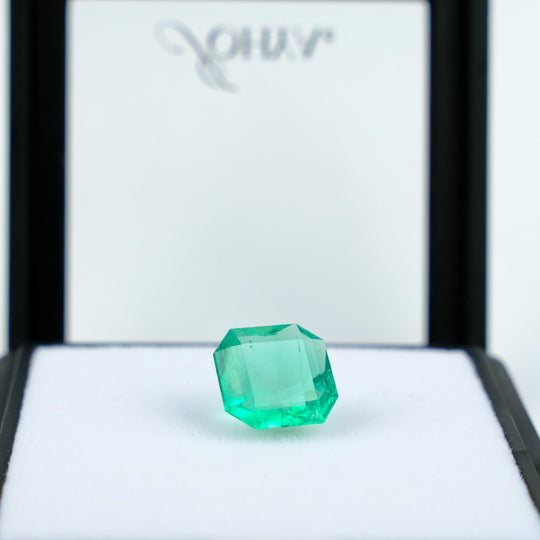
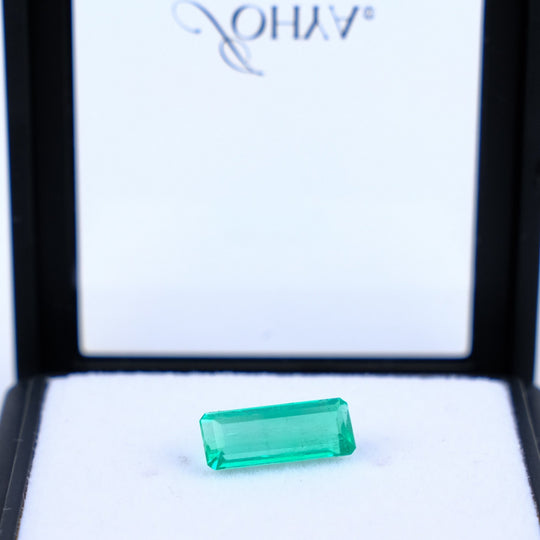
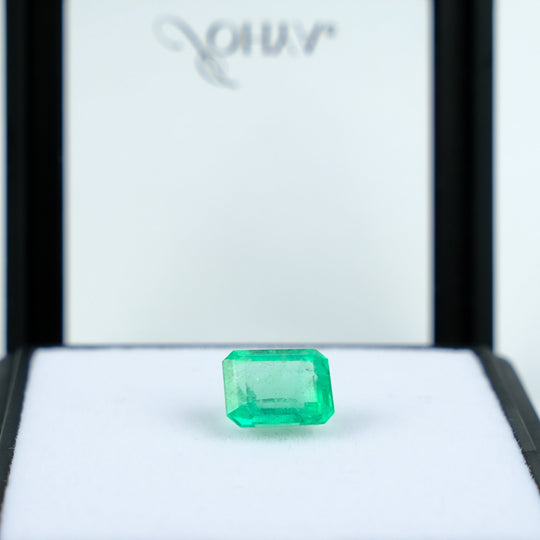
Certified Johya emerald, emerald cut, on a dark fabric background

Direct sourcing, no middleman

Emerald, bought at the source

We hand-pick every stone on the spot: in Muzo, Chivor and Coscuez. No middleman between the mine and you: you pay for the stone, not the chain.

Our guarantees

  • Certified stones

    Independent laboratory report supplied with every stone

  • Secure delivery

    FedEx shipping, insured and signed for

  • An answer within 24 hours

    A question about a stone, an answer the next working day

  • Bought at the source

    Hand-picked on the spot, no middleman

Stone checker

Every Johya stone carries a number, and that number can be verified

Enter the reference engraved on your stone's booklet: you will find its product page, its laboratory certificate and, where one exists, its journey from the mine.

Verify a stone
Entrance to an emerald mine in Muzo, July 2026

Our approach

Traceability at the heart of what we care about

Every stone you see here was hand-picked on the spot, near the mines of Muzo, Chivor and Coscuez. No middleman takes a margin between the mine and you. The stock is real, photographed stone by stone: every stone offered for sale is one we actually hold.

  • ·
    One stone only We work with emerald and nothing else. All our stock comes from Colombia.
  • ·
    Bought on the spot Each stone is bought on site, in Muzo, Chivor or Coscuez, from identified sellers.
  • ·
    Documented traceability Identified seller, gemological certificate, full journey on request.
Our full story

Understanding emerald

Emerald is the green variety of beryl, colored by chromium and vanadium. It is one of the four precious stones recognized by French regulations.

A closer look at emerald criteriaColor, origin, price, trapiche and care

The color of an emerald

Color sets the price ahead of clarity and ahead of weight. Colombian gems give a pure, slightly bluish green that holds its light even in dim conditions. Muzo leans toward a deep green with a bluish edge, Chivor toward a fresher green.

How to judge an emerald, criterion by criterion

Where emeralds come from

Colombia supplies most of the stones of high color, in the belts of Boyacá and Cundinamarca. Zambia produces darker, colder gems, often cleaner. Origin is read on a laboratory report, from the inclusions and the chemistry.

Emerald-producing countries

What an emerald costs

Price is read per carat and does not follow weight in a straight line. Below two carats, color carries almost all of the value. In our catalog, the stones available run from €180,00 to €17.460,00, or €269,88 to €6.648,65 per carat.

Emerald prices, criterion by criterion

The trapiche emerald

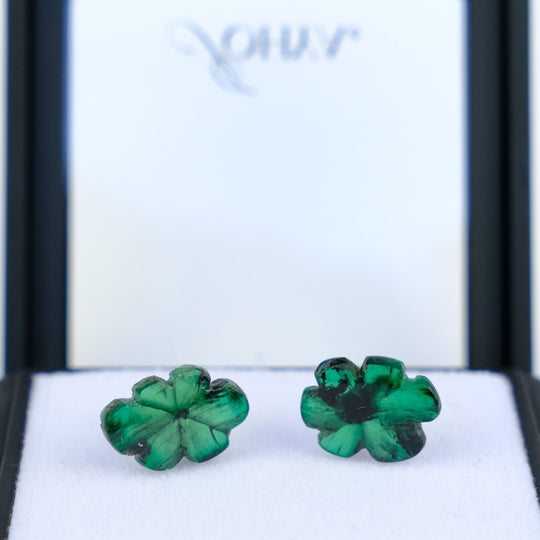
A trapiche shows six dark arms running from the center, a pattern formed by carbon and albite inclusions trapped during growth. These stones come mostly from the western belt of Boyacá and are cut as tablets.

Our trapiche emeralds

Caring for an emerald

The gem scratches slowly but breaks more easily than a sapphire, because of its internal fissures. Ultrasonic baths and steam are to be avoided, they drive out the filling. Lukewarm water and a mild soap are enough, with a soft brush.

Jeweler, designer or dealer?

Emeralds for jewelers, designers and dealers

Selection on request, video presentation with the stone in hand, EU invoicing with reverse-charge VAT. Certified stones, bought in Colombia, for workshops that want a documented origin without going through a wholesaler.

Trade access

Unique pieces

Our certified emeralds

Every stone is bought at the source, certified by an independent laboratory and delivered with its documented journey.

See the selection

Frequently asked questions about emeralds

What is an emerald?

The green variety of beryl, colored by chromium and vanadium. It is one of the four precious stones under French law, with diamond, ruby and sapphire. Almost all natural emeralds show visible inclusions, which is normal and is even one of the signs that set them apart from synthetics.

Why buy an emerald from Johya?

Because we buy every emerald ourselves, in Colombia, with no wholesaler or reseller between the stone and you. Each one arrives with an independent laboratory report and its weight recorded at every stage, from rough to cut stone.

How can I be sure an emerald is natural?

Every Johya emerald comes with a certificate from an independent gemological laboratory attesting its natural origin, and the measured degree of treatment appears on its product page.

How can you recognize a genuine emerald?

A natural emerald almost always shows a jardin of inclusions, and a perfectly clean stone deserves a close check. Only an independent laboratory can settle it, and our criteria to judge an emerald help you read the stone before buying.

Is an oiled emerald of lesser quality?

Not in itself. Minor oil is common and accepted. A moderate degree weighs on the price. The laboratory measures it, and the product page states it.

Can I come and see the emeralds in Paris?

Yes, by appointment, with the stone in hand and in daylight. Write to us to arrange a time, or ask for a video presentation first.

What is the difference between a Colombian emerald and a Zambian emerald?

The Colombian gives a pure, slightly bluish green that stays bright, the Zambian a bluer, darker, colder green, often with fewer inclusions. At equal quality the first sells for more. The detail is in our article on Zambian emeralds.

Another question? Write to us