



Muzo
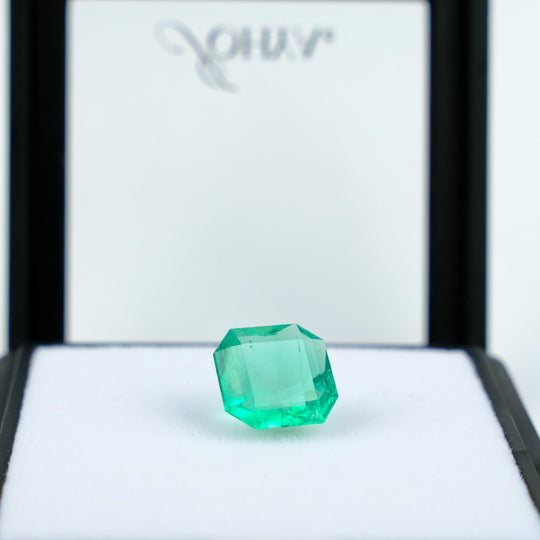
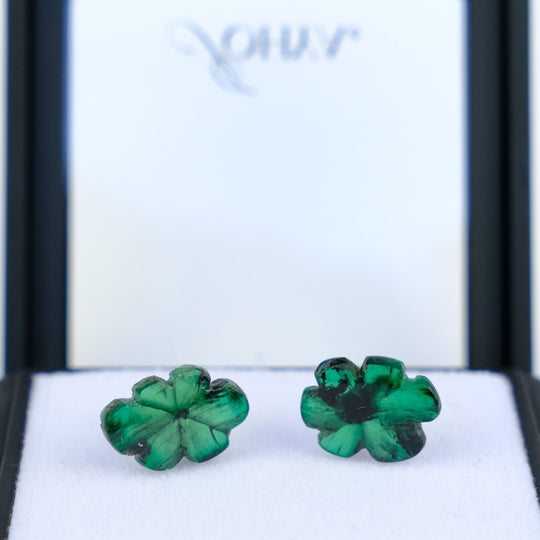
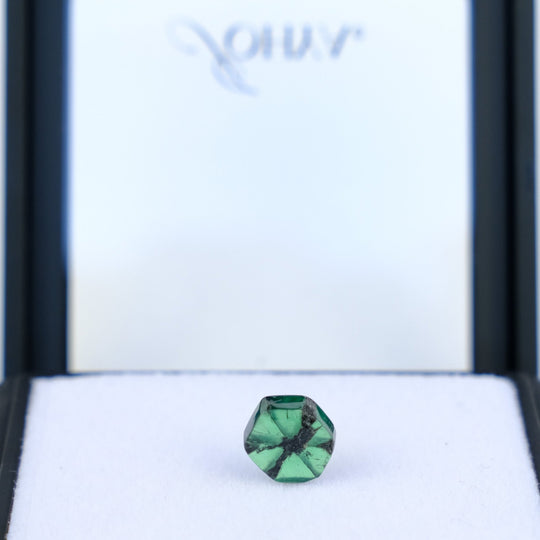
Western belt, Boyacá. Deep green with a bluish edge, crystallized in calcite. Three-phase inclusions are most common here.


We buy in the western belt of Boyacá, around the Muzo and Coscuez mines, from named sellers on the ground. Vincent Renault, precious stone dealer and co-founder of Johya, checks every stone before sending it to the laboratory.
No wholesaler and no auction room comes between the purchase and the listing.
Part of the catalog is documented end to end. The rough is photographed on the day it is bought. Cutting is documented at the workshop in Bogotá, and the laboratory report closes the file. Stones that have a file carry a link to it.
 01. The rough, on site
Bought in Boyacá and photographed the same day
 02. Cutting, in Bogotá
Entrusted to a cutter who works on emerald only
 03. The report
Independent laboratory, verifiable number
Colombian crystals form in black shales run through by hot brines, with no magma involved. That sedimentary origin is rare among the world's major deposits, and it produces crystals low in iron. Hence the clean, slightly bluish green that holds its light in dim conditions where a Zambian stone turns dark.
Laboratories also look for a marker visible under a loupe, the three-phase inclusion, a gas bubble and a salt crystal trapped in a pocket of liquid.
Our guide to the characteristics of Colombian emerald details these signs, and our page on the Colombian emerald mines covers Muzo, Coscuez and Chivor one by one.

Western belt, Boyacá. Deep green with a bluish edge, crystallized in calcite. Three-phase inclusions are most common here.
About ten kilometers from Muzo. Slightly less bluish greens, with pyrite often visible in the garden of the stone.
Eastern belt, different host rock. Greener and fresher than the western belt.
Almost every emerald on the market receives a filling in its fissures. Most often oil, sometimes a liquid resin, more rarely a hardened resin. A hardened resin points to a stone of lesser quality, and the price reflects it. The laboratory measures the nature of the product and its degree, from insignificant to significant on the LMHC scale, and the listing carries both measurements.
A stone announced as untreated while its report mentions minor oil is a stone badly described. You will not find that contradiction here. The Treatment filter above the grid sorts the stones by measured degree.
The 58 stones available on this page run from €180,00 to €17.460,00 including tax, or €269,88 to €6.648,65 per carat. The spread comes first from color saturation, then from clarity. Treatment and weight come after.
Below two carats, color carries almost all of the value. Above that, an intense color becomes rare and the price per carat climbs in steps rather than in a straight line. To read each criterion on a stone, see how to judge an emerald.

A macro photo flatters every stone. Video in daylight is more honest, which is why it sits on every listing.
If you are torn between two references, send us both numbers. Vincent films the stones side by side under the same light and sends the comparison back, with no commitment.
Most of them, yes, like almost every emerald on the market. The laboratory measures the nature of the filling, oil or resin, and its degree, and the product page states both.
By the report number, with the laboratory that issued it, or on the Verify my stone page, which finds its provenance file.
Yes, from a weight and a budget. The search takes place in Colombia on the next trip, with no commitment on your part.
Insured FedEx, delivered against signature, in France and abroad. Hand delivery is possible anywhere in the world, express depending on your project.
The listing names it when the laboratory report states it, or when we bought the stone ourselves on site. Without one or the other, we write Colombia and name no mine.

Give us the weight you have in mind, the shape, the hue and the budget. We look for it on site on the next trip, and you commit only once the stone has been found and filmed.
A question about a stone? We answer within 24 hours, in English, French or Spanish.
