
The expert behind Johya
Vincent Renault, gemologist and co-founder of Johya
A lifelong gemology enthusiast et qualified in gemology, Vincent Renault is co-founder of Johya with his partner Dimitri Velasco.
His role is concrete: travel to Colombia, to the Boyacá region, choose the stones in hand, negotiate directly with the sellers, then follow every emerald through to its certification by an independent laboratory.
Background
A gemology qualification is not a shop-window argument. It is what gives you the vocabulary, the instruments and the gestures to describe a stone without embellishing it — and, when necessary, to turn it down. An emerald is read under a 10× loupe, under the lamp, on the scales; it is not talked up.
Every stone in the catalogue has passed through Vincent's hands before arriving here: examination under the loupe and the UV lamp, weighing at each stage, photographs without retouching. Nothing is generated or "improved" by computer: what the listing shows is what the customer will receive.
What he checks on every stone
Color first. The emerald is a beryl that owes its green to chromium and vanadium. It is the criterion that weighs most heavily in value: its vividness, its saturation, and the way it holds up under different lights.
The "jardin" next. The inclusions of an emerald are not defects to be hidden: they are its fingerprints. A perfectly clean emerald should arouse suspicion rather than desire. What matters is not their absence, but their nature and their position.
Cut and weight last. A good cut serves the color and the soundness of the stone — the emerald is hard but fragile. Weight is never read on its own: two identical carats can be worth ten times less one than the other.
In the field, in Colombia
Purchases are made on site, in the emerald-bearing zone of Boyacá. The real work owes less to the folklore of the markets than to patience: see a great many stones, set aside the vast majority, come back, and buy only what can be defended once home.
This presence in the field makes it possible to document a stone's journey — photographs at purchase, during cutting, once cut — and to publish it. That is what Johya calls its traceability: not a promise, but a file that can be consulted stone by stone.
What he will never say
That a stone comes from a specific mine, without proof. Buying an emerald in Muzo does not prove it was extracted there: the place of purchase is not the deposit. Only an independent laboratory can attest an origin, and it attests a country — rarely a mine. When Johya writes "Colombia", that is what the certificate says.
That an emerald has had no treatment, for convenience. Nearly all the emeralds on the market are oiled: it is an old lapidary practice, accepted and exempt from the "treated" mention. Johya goes further and states the degree observed — none, minor, moderate. A stone containing resin, on the other hand, falls under a treatment that must be declared: it is flagged as such.
This line is not a commercial pose: it is the only way to stay accurate. What cannot be verified is not asserted.
The field notebook
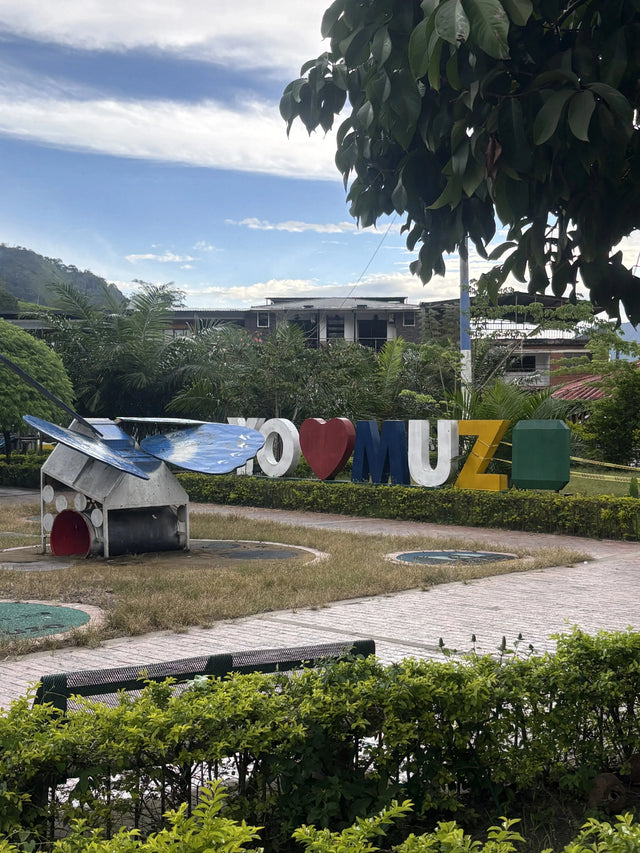
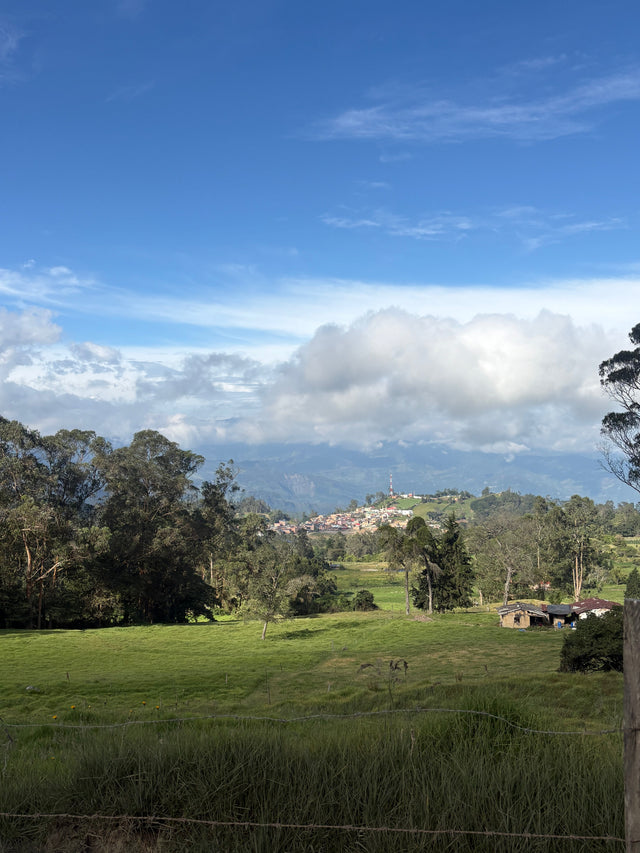
The buying trips are documented as they happen: roads, emerald markets, cutting workshops, meetings with sellers.
Articles
The articles on this site are written by Vincent Renault. Each one starts from a stone seen in hand, a trip, or a question from a client.
- Emerald Twinning: The Formations Collectors Look For
- Beryl: The Mineral Family of the Emerald
- The Muzo emerald museum: a visit inside
- Emerald on Silver: What a Handmade Colombian Piece Is Worth
- Emerald anniversary: 40 years of marriage
- Emerald Prices: The 7 Criteria That Set the Figure
- The Emerald, Birthstone of May
- How Much Does a 1-Carat Emerald Cost in 2026
- The emerald-cut diamond, what this shape really changes
- Ruby, sapphire or emerald: which one to choose?
- The cabochon emerald, a cut with its reasons
- Australian Emeralds: The Continent's Forgotten Deposits
- Afghan Emeralds: The Forgotten Green of the Panjshir
- Zambian Emeralds: A Source That Now Matters
- Muzo, emerald capital of the world, seen from the inside
- Bogotá to Muzo, the Road That Leads to the Emeralds